- IDEA:
- 001
- FROM:
- dumbGTM
- DATE:
- Oct 10, 2026
- RE:
- strategy, competition, sales
Marketing and War: The Logic Beyond Clichés
What Fabius, Operation Uranus and Moltke can teach a GTM team: pick your fights, hit both flanks at once, and give your team the intent instead of a script.
Marketing and war
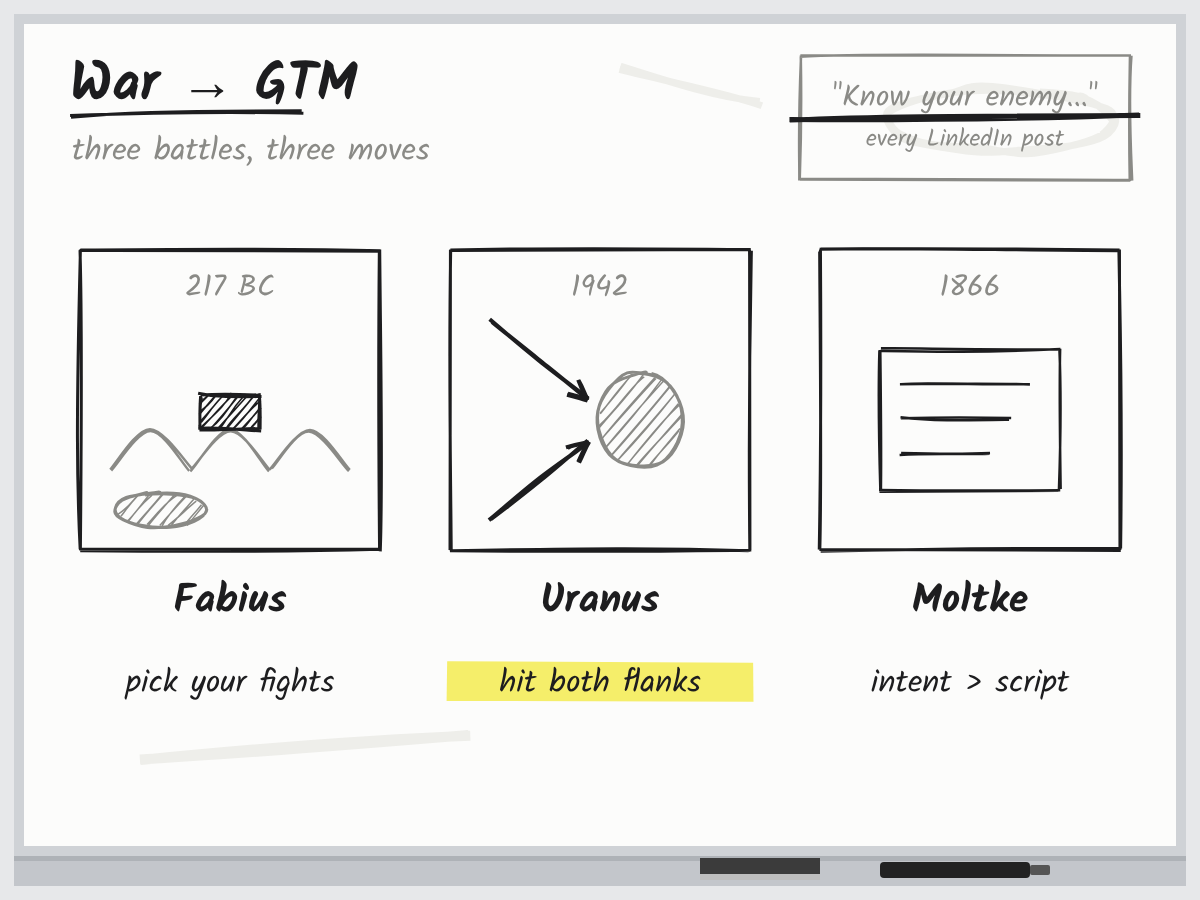
“Marketing is war” has been a cliché since at least 1986, when Al Ries and Jack Trout published Marketing Warfare. Most of what came after is Sun Tzu quotes on LinkedIn. I still think the great generals of history are worth reading for a wide range of life lessons. One of them, by some stretch of the imagination, can be GTM motions and plays. I think the biggest reason I’m writing this is because I am a student of chess and of military tactics, and I work in GTM. Combining elements from those and deriving analogies is fun to me. Here are three: Fabius, Operation Uranus and Moltke.
Fabius: the general Rome called a coward
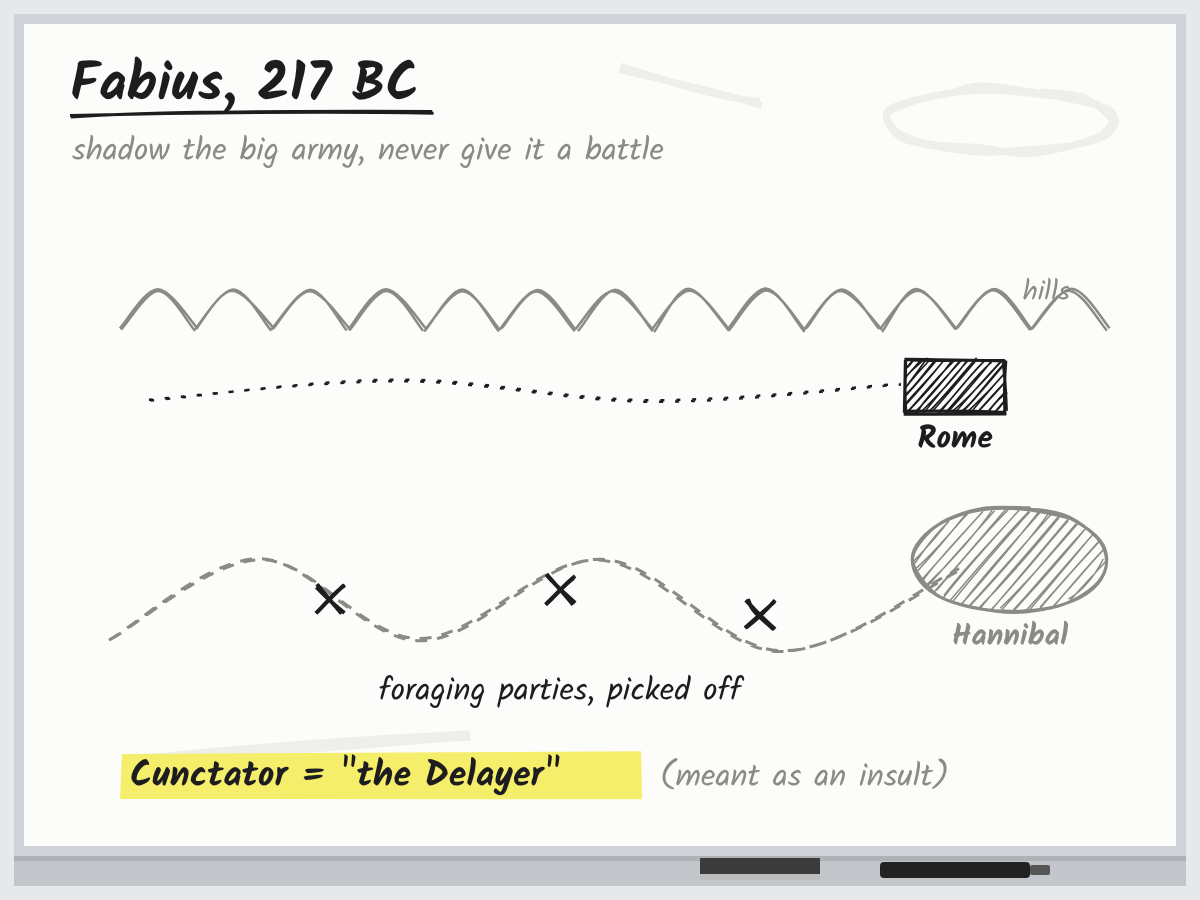
In 217 BC, Hannibal had just wiped out two Roman armies, at Trebia and Lake Trasimene. Rome made Quintus Fabius Maximus dictator, and he refused to fight. He shadowed Hannibal from the hills, where Carthaginian cavalry was less useful, picked off foraging parties and won small skirmishes. Hannibal was far from home and short on supplies, so every week of waiting cost him more than it cost Rome. Romans hated it. They called him Cunctator, “the Delayer,” as an insult. In 216 BC they replaced him and attacked head-on at Cannae, one of the worst defeats in Roman history. Afterwards, they went back to his strategy.
Don’t fight the incumbent where they’re strongest
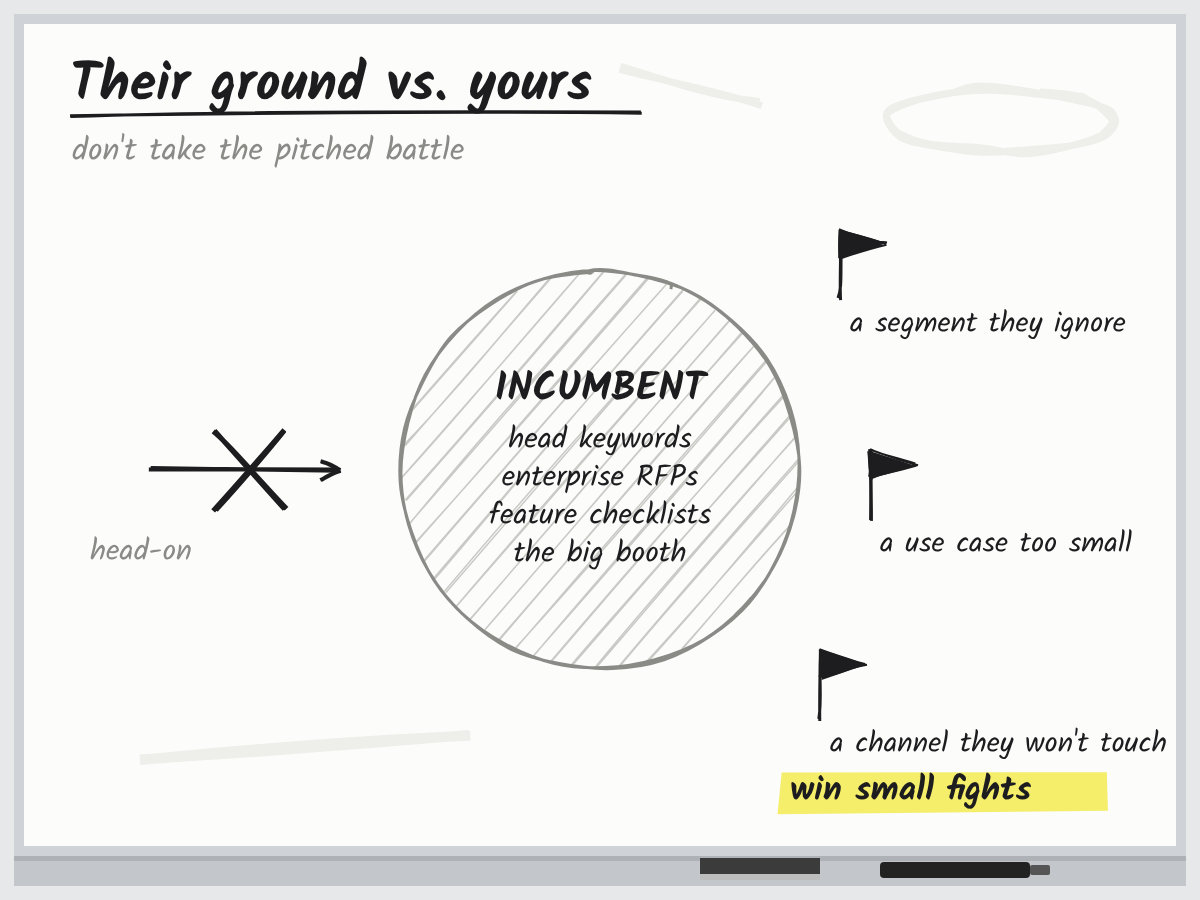
If you’re the smaller company, the incumbent wants a pitched battle. Head keywords they’ve ranked for over a decade. Enterprise RFPs with 300-line security questionnaires. Feature checklists. The biggest booth at the conference. You’ll usually lose those. The Fabian version is to stay on ground that suits you: a segment they underserve, a use case too small for their roadmap, a channel their brand team won’t touch. Win those small fights, keep your burn low, and let their size slow them down. Big companies have a lot to defend and a lot of meetings before they can respond, so being patient can work in your favour.
Operation Uranus: hit the flanks, not the city
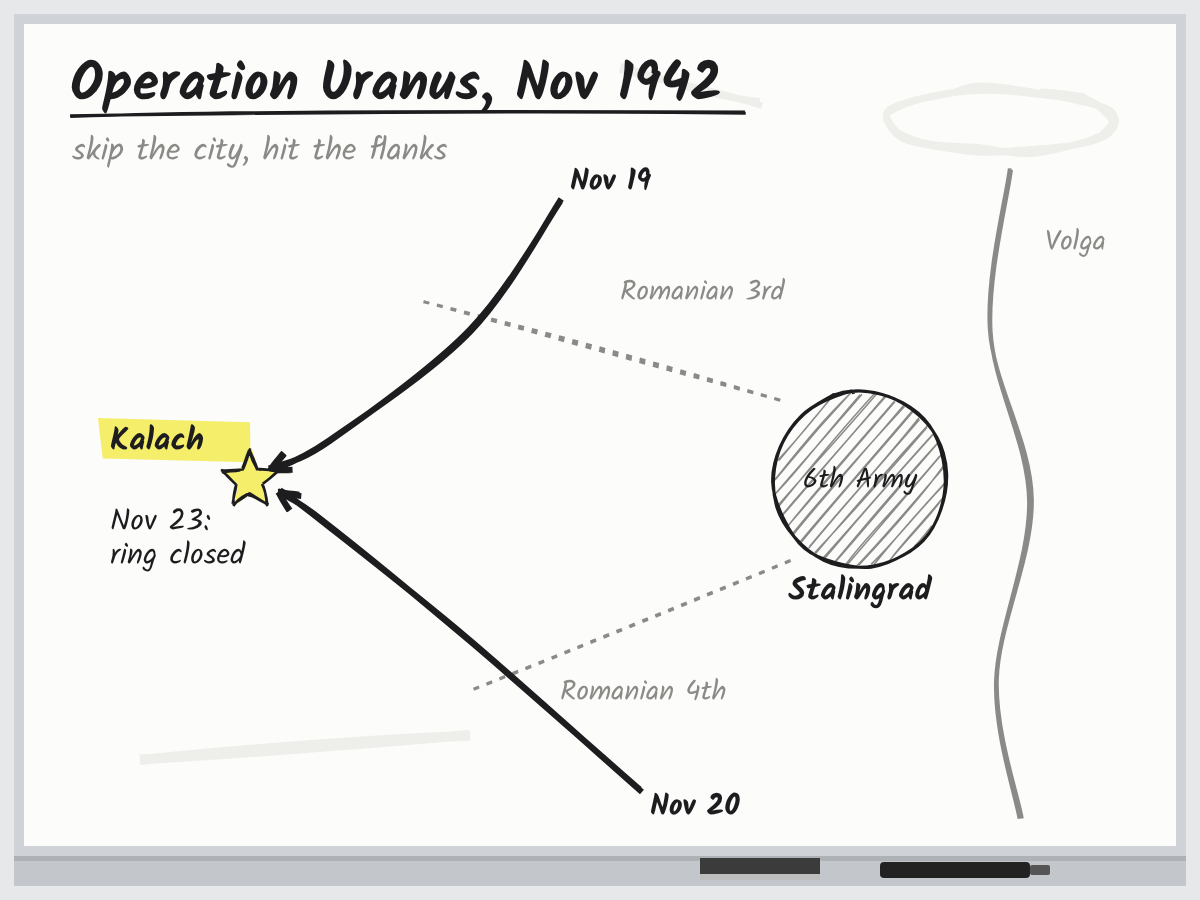
By November 1942, the German 6th Army had spent months fighting street by street for Stalingrad. The Soviet high command, with Zhukov and Vasilevsky leading the planning, chose not to win that fight. They looked at the flanks instead. North and south of the city, the line was held by the Romanian Third and Fourth Armies, which were stretched thin and short on anti-tank weapons. The northern attack started on November 19 and the southern one on November 20, so the Germans couldn’t deal with one and then the other. On November 23 the two arms met near Kalach, trapping somewhere between 250,000 and 300,000 Axis troops.
The dual-ICP pincer
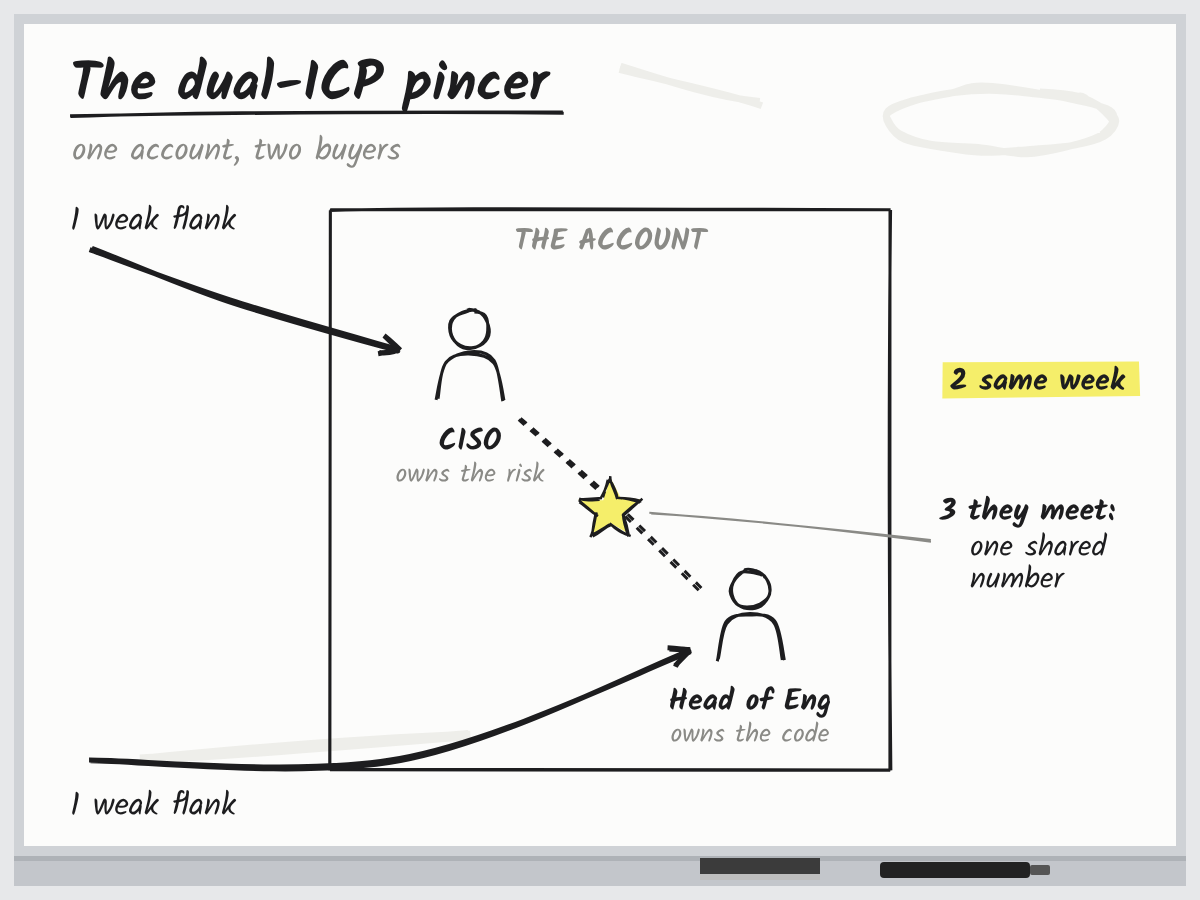
Plenty of products don’t have one buyer. Picture a security tool: the CISO owns the risk but can’t change the code, and the head of engineering can change the code but doesn’t own the risk. Each one is a weak flank, because each feels a gap the current setup doesn’t close. Uranus suggests three rules. Pick the flanks where each role feels real pain, even if only one of them owns the budget. Move on both in the same window, so one skeptic can’t kill the deal before your champion exists. And make sure the two meet, through one shared number or a meeting they both care about. If they never connect, you’re running two separate deals.
Moltke: plans break on contact
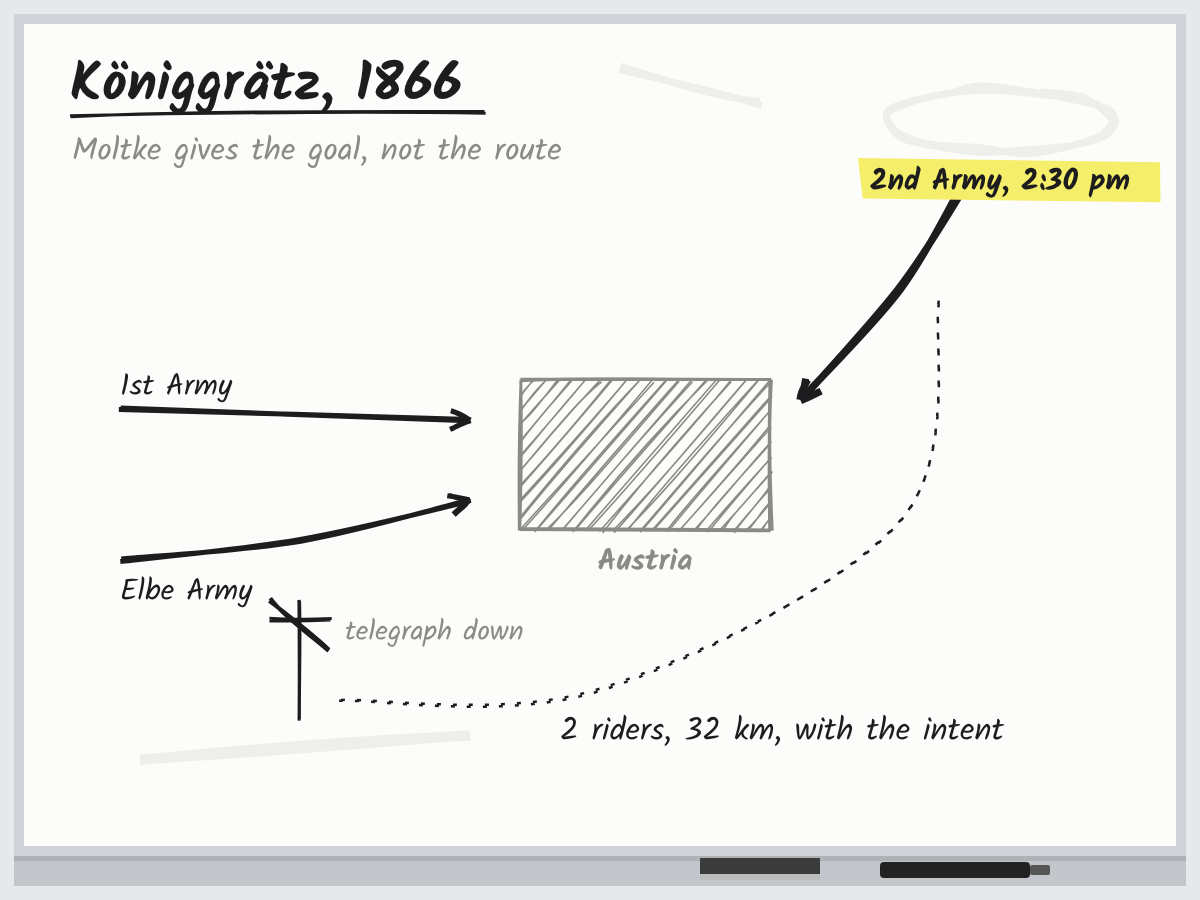
Helmuth von Moltke ran the Prussian General Staff from 1857 to 1888. His armies were too big and too spread out for one person to steer, and the telegraph rarely reached the front. In 1871 he wrote that no plan of operations holds with any certainty past the first contact with the enemy’s main force. So his orders gave the goal, the resources and the limits, and left the method to the officer on the ground. At Königgrätz in 1866, the telegraph lines were down. Two riders carried his order to the Crown Prince, whose army of almost 100,000 arrived that afternoon on the Austrian flank and decided the battle.
Write orders, not playbooks
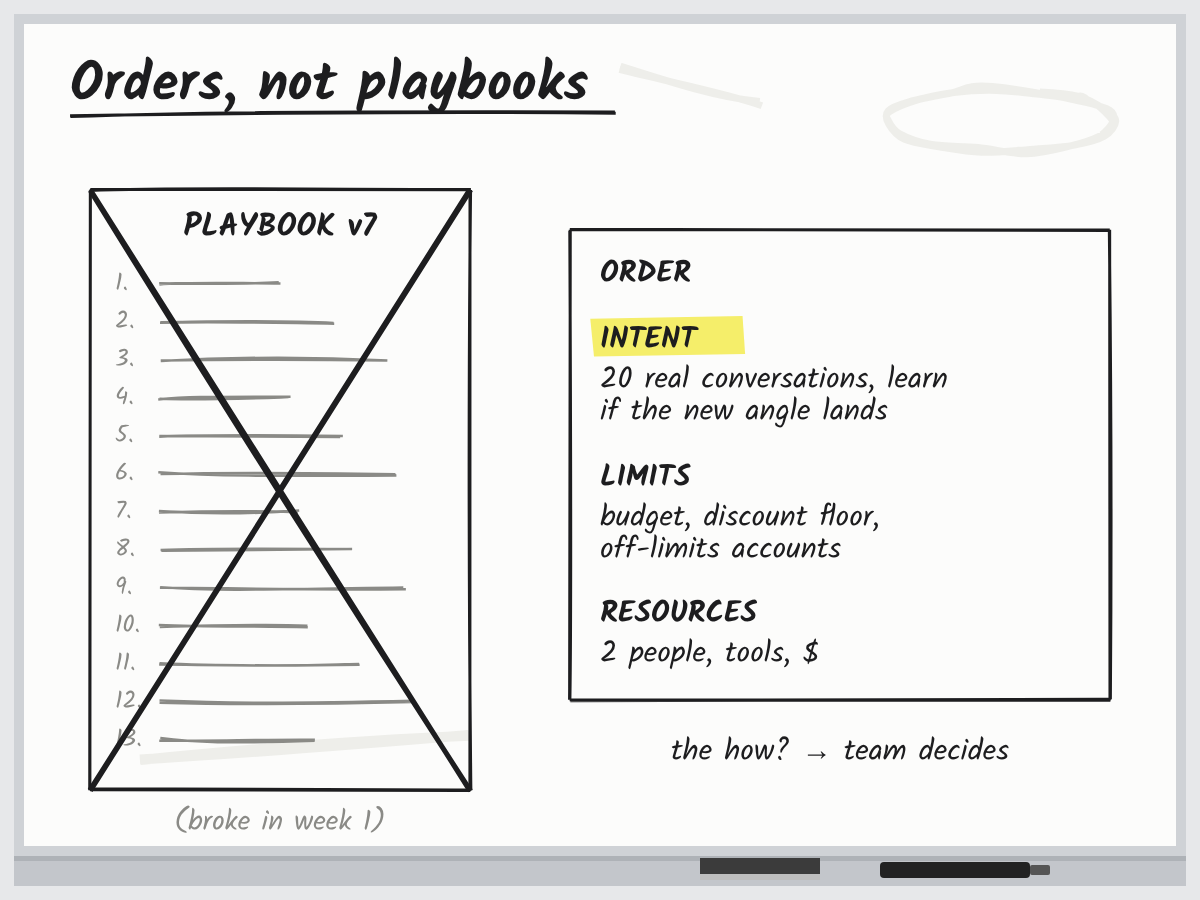
Most GTM plans break in the first week or two of running them. I’ve seen this at companies of all sizes, with red tape and without. Buyers react differently than the persona doc said, or a channel underdelivers. The 40-slide plan becomes a historical document. Moltke’s version of a plan has three parts. Intent: “20 qualified conversations with security leads this quarter, to test the compliance angle.” Limits: budget, a discount floor, accounts that are off limits. Resources: people, tools, money. The team owns the how, and you review against the intent. This only works if everyone shares context on the ICP, positioning and numbers. There is always the risk of getting five people running five strategies, so be mindful.
Three moves, one board
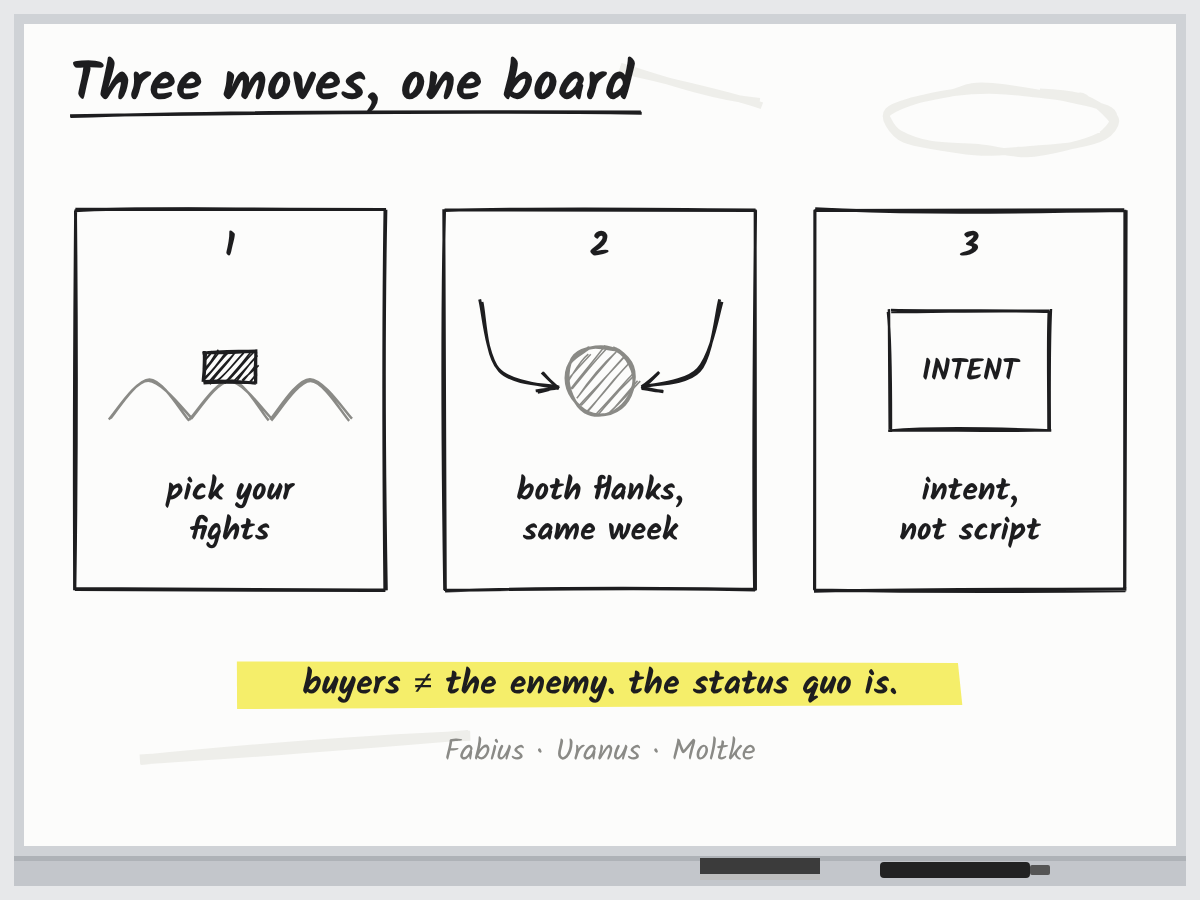
If I had to fit this on a sticky note: pick your fights, hit both flanks at once, and give your team the intent instead of the script. Fabius for the smaller company, Uranus for accounts with more than one buyer, Moltke for teams whose plan fell apart. The analogy has limits. Buyers aren’t the enemy (nor are competitors in the literal sense), and a lot of bad outbound comes from teams that take words like “target” and “attack” a little too seriously. The real opponent is usually the status quo. The poet Ennius said Fabius saved Rome by delaying. I’d keep that in mind the next time a slower, less exciting plan gets dismissed in a meeting.