
- IDEA:
- 002
- FROM:
- dumbGTM
- DATE:
- Oct 11, 2026
- RE:
- brand, outbound, ai
It's About the Human
Automation made personalization cheap for everyone, so its value is moving to the parts that are hard to automate: real people. How to put your humans forward, and where the idea breaks.
It’s about the human
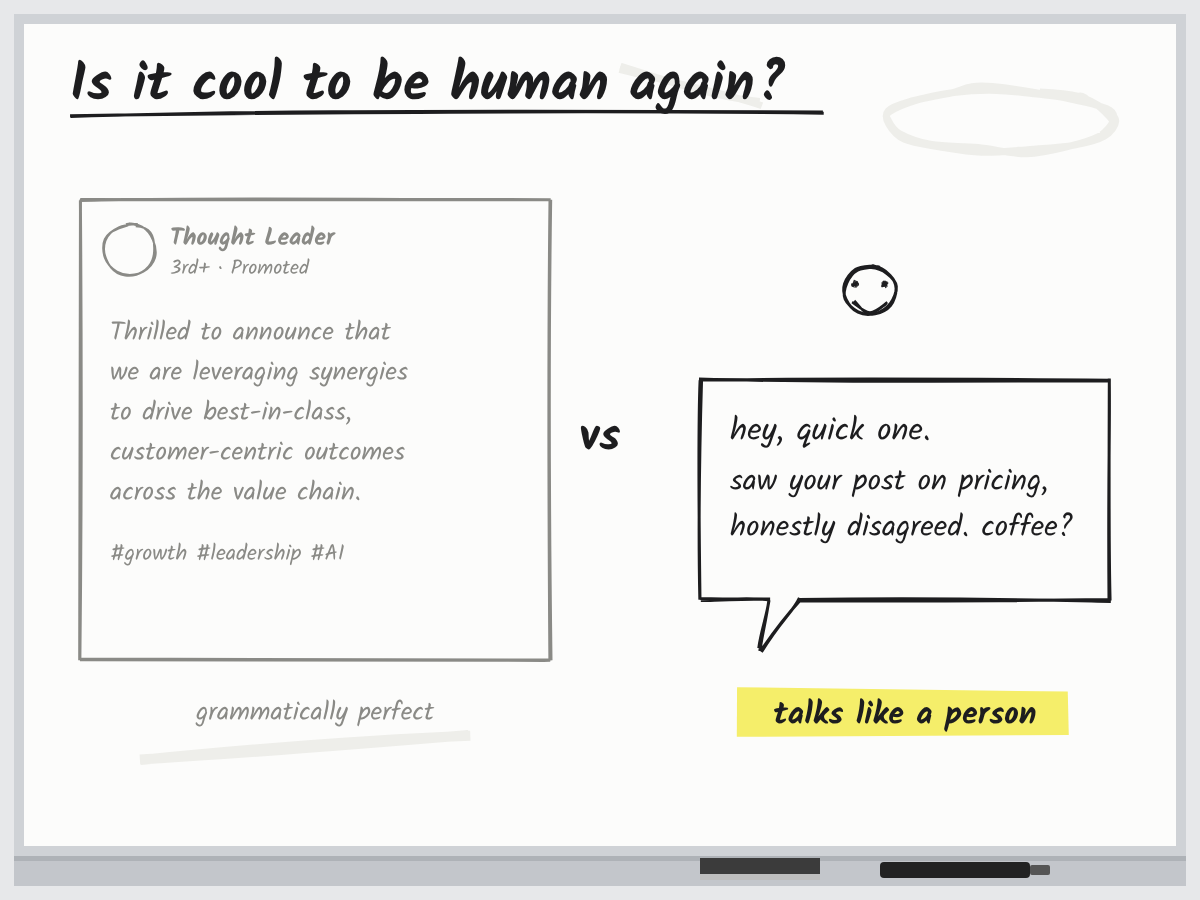
Over the last decade, I’ve watched automation come a long way. Maybe too far for its own good. You open LinkedIn and read a post that’s grammatically perfect, full of professional language and corporate lingo, and you want to gouge your eyes out. Then someone talks to you like a person, and you notice. Yes, you can automate personalization at scale. But now everyone can, and everyone is. When that happens, the value drops and moves to the parts that can’t be automated. Email versus phone outbound is a clean example. I’ve seen email outbound die before my eyes (for the most part), because AI made it so easy to personalize at scale. So, is it cool to be human again?
How we got here
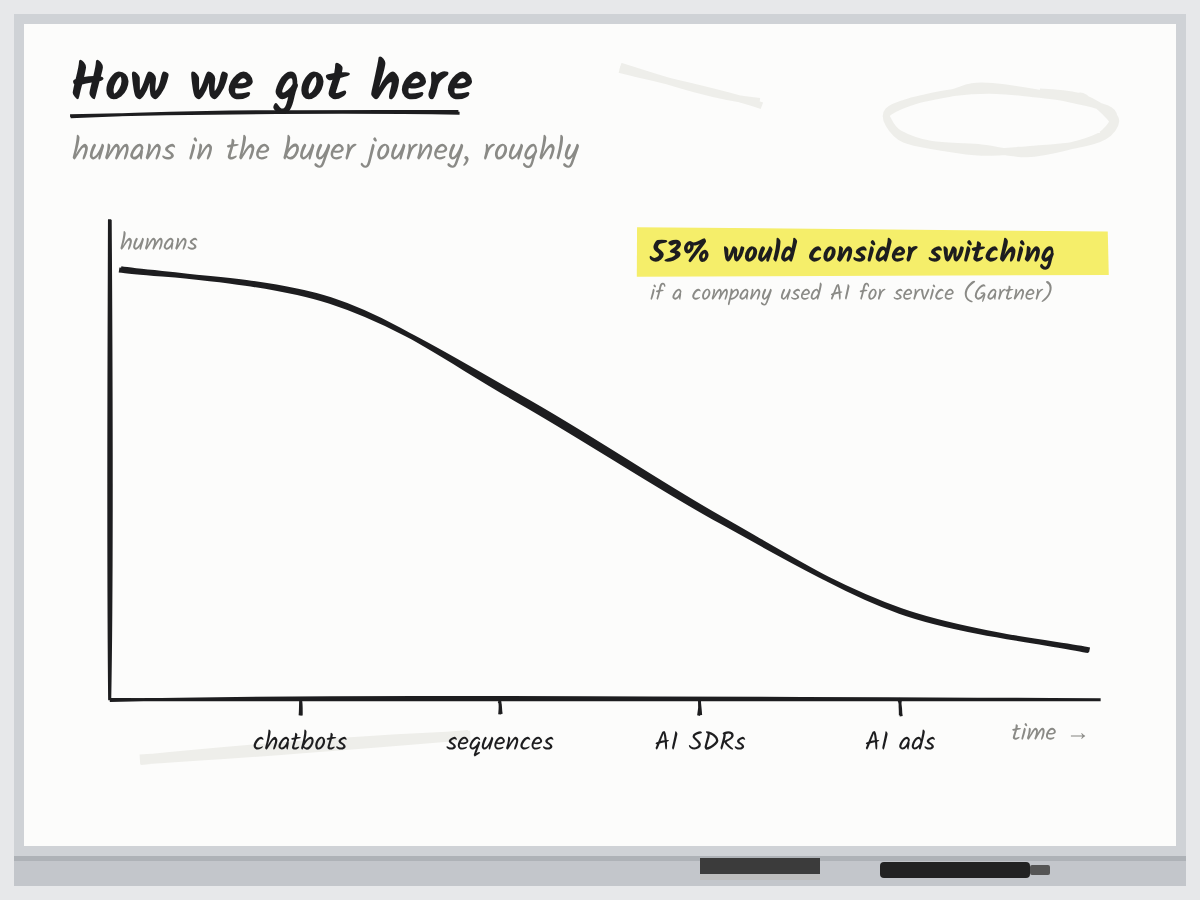
For about ten years, a lot of GTM work has been about taking people out of the loop. Chatbots answer first. Sequences send themselves. AI SDRs write and reply. Ads use generated faces. Each step made sense on a spreadsheet, and buyers noticed anyway. In a late-2023 Gartner survey of 5,728 customers, 64% said they’d prefer companies not use AI in customer service, and 53% said they’d consider switching to a competitor if they found out a company was. A 2026 Bentley-Gallup survey found 49% of US adults view AI-made ads negatively, rising to 66% of 18 to 29 year olds. Automation still works for plenty of tasks, but people can tell when it’s there, and many of them mind.
When everyone can, nobody stands out
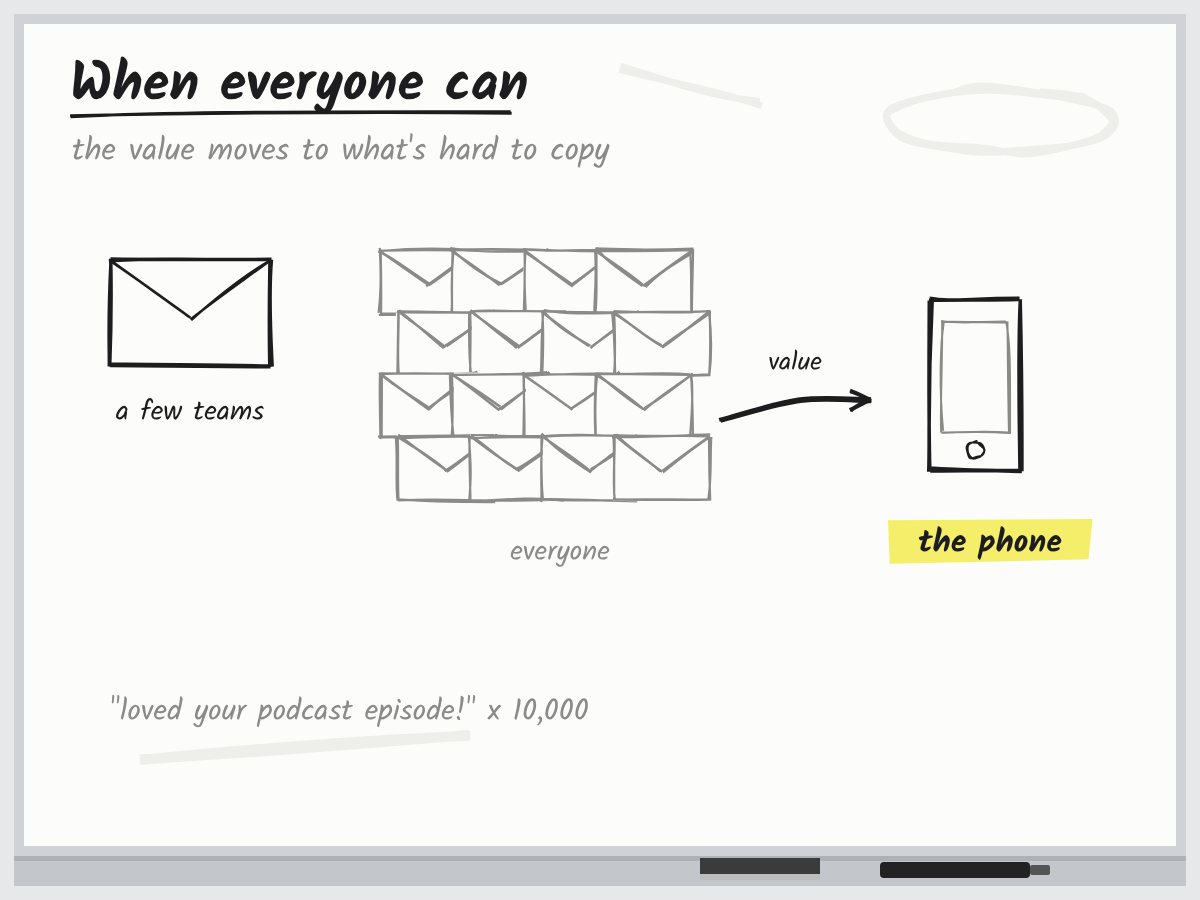
Personalization at scale was a real advantage when only a few teams had it. A first line about someone’s podcast appearance used to feel thoughtful. Now every tool writes that line, so every inbox gets it, and it reads like a template. That’s how commoditization works: once everyone has the same capability, it stops being a reason to choose you. The value moves to whatever is still hard to copy. In outbound, that has been the phone. A call from a person who did some homework is harder to fake, and much harder to send ten thousand of in an afternoon. There’s more on that in Does cold calling still work?
Put your humans forward
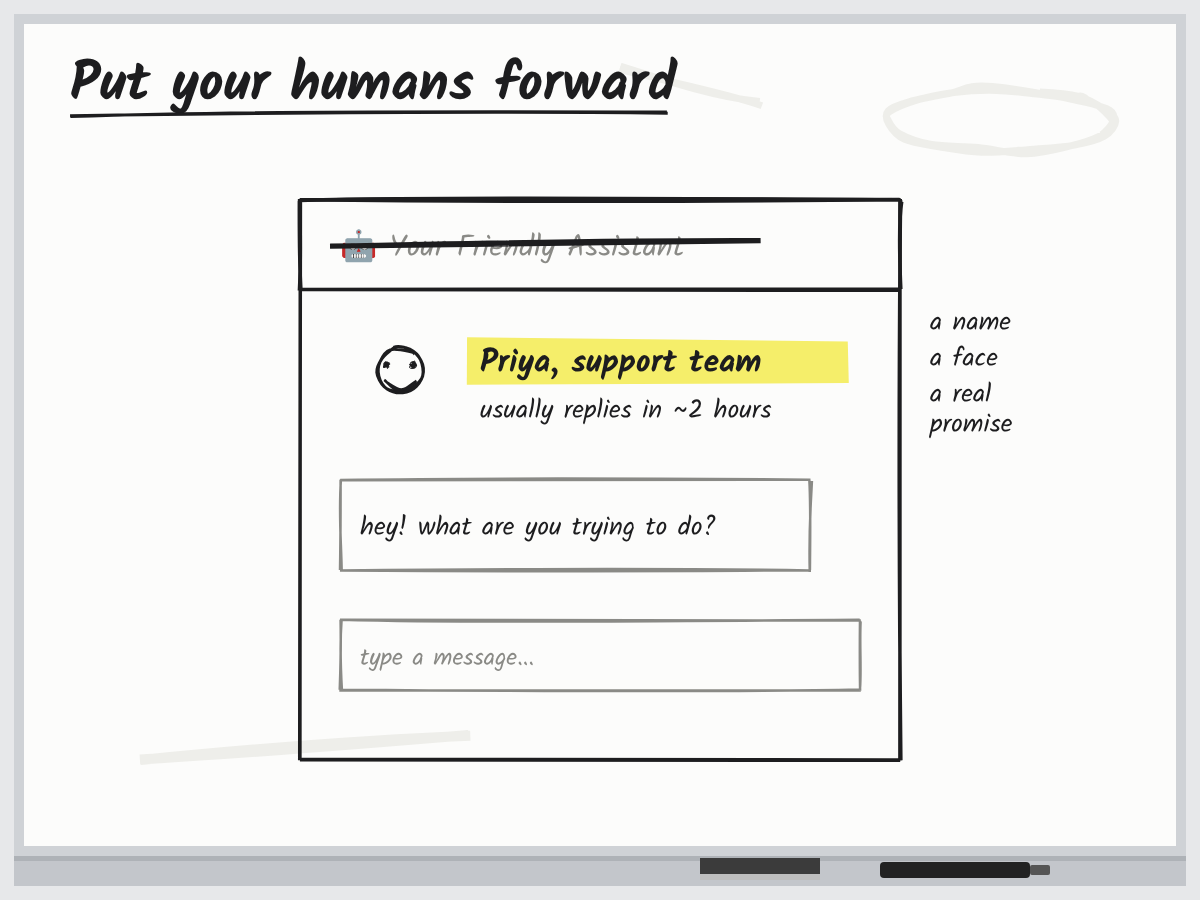
The simplest version is to show a real person where buyers expect a bot. A chat widget that says “Priya, on the support team, usually replies within two hours” instead of a cheerful assistant with no name. Sales emails from someone with a face and a real signature, sent at a volume one person could have sent. A pricing page that tells you who you’ll be talking to. Tom Orbach’s piece on proof of humanity has a good list of companies doing this, including security vendors that put a “chat with us on Slack” button next to the demo form. Most of it costs very little, as long as your people are willing to be named.
Brag about their humanity
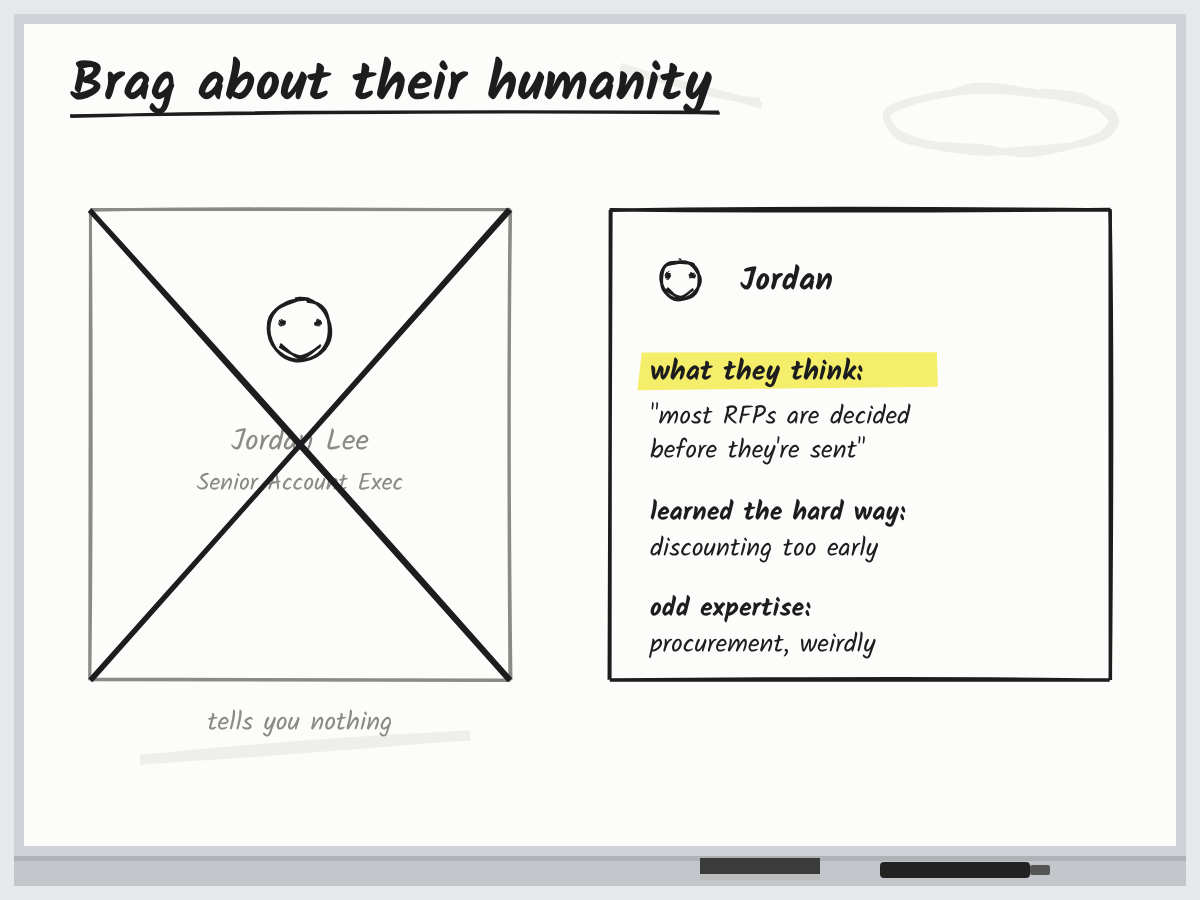
Putting a name on things is step one. The bigger move is to brag about the humans themselves. Most team pages are headshots and job titles, which tell a buyer very little. Share what your people think instead: their opinions on the industry, the mistakes they’ve learned from, the odd expertise they bring, and the way they explain things when nobody edits them. That kind of content is hard to generate convincingly, because it comes from one person’s experience. It also gives buyers a reason to trust the company before they ever get on a call. Humanity works best as the content itself, with the polish turned down a little.
Do something that doesn’t scale
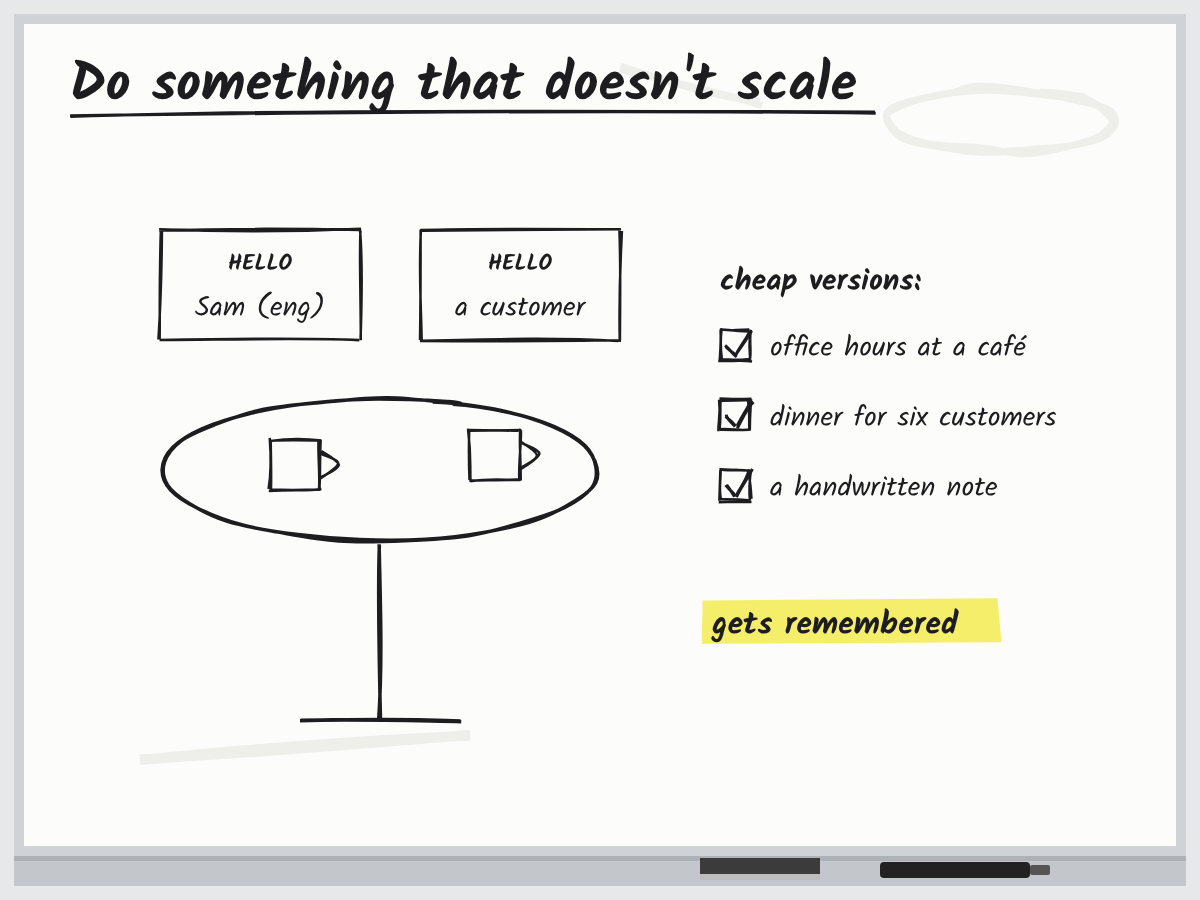
Some of the clearest proof of a human is time spent in person. In October 2025, Cursor took over a coffee shop in SoHo for a day. Drinks were free, staff wore name tags, and around 70 people came to meet the team and each other, according to Business Insider. It was a small event by most measures, and it was the kind of thing an AI tool can’t do on your behalf. Smaller teams can run versions of this cheaply: office hours at a café, a dinner for six customers, a handwritten note after a first deal. They don’t scale, which is part of why people remember them.
Where it breaks
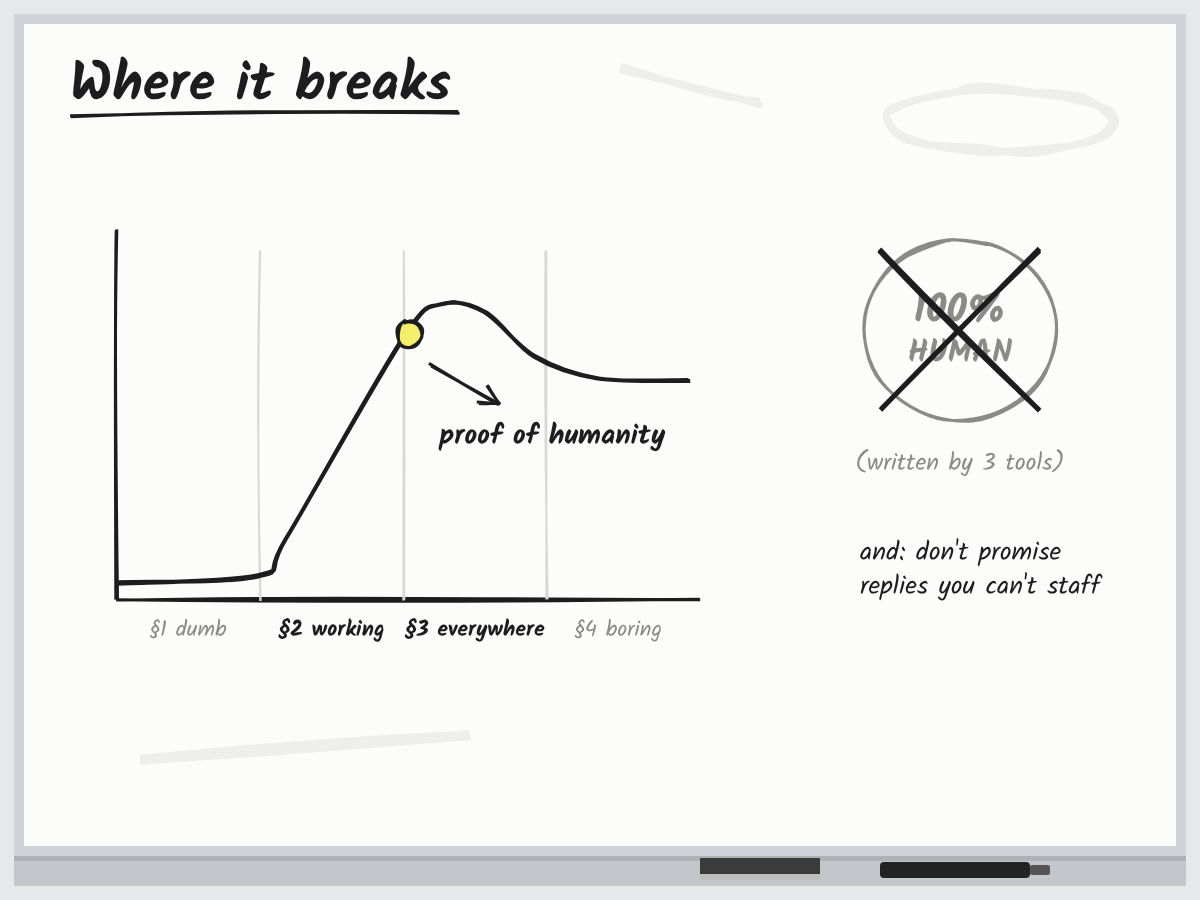
This idea has limits, and I’d rather name them. Humans don’t scale, so don’t promise a two-hour reply time you can’t staff. A slow human can be worse than a fast bot. The bigger risk is that “human” turns into a costume: AI-written posts about being authentically human, stock photos of a “founder,” and “100% human” badges on content that went through three tools. Once enough companies do that, buyers will tune it out the same way they tuned out personalized first lines. That’s the dumb idea loop at work. Proof of humanity is in the Working stage right now, and some of it is already heading toward Everywhere.
Show the humans
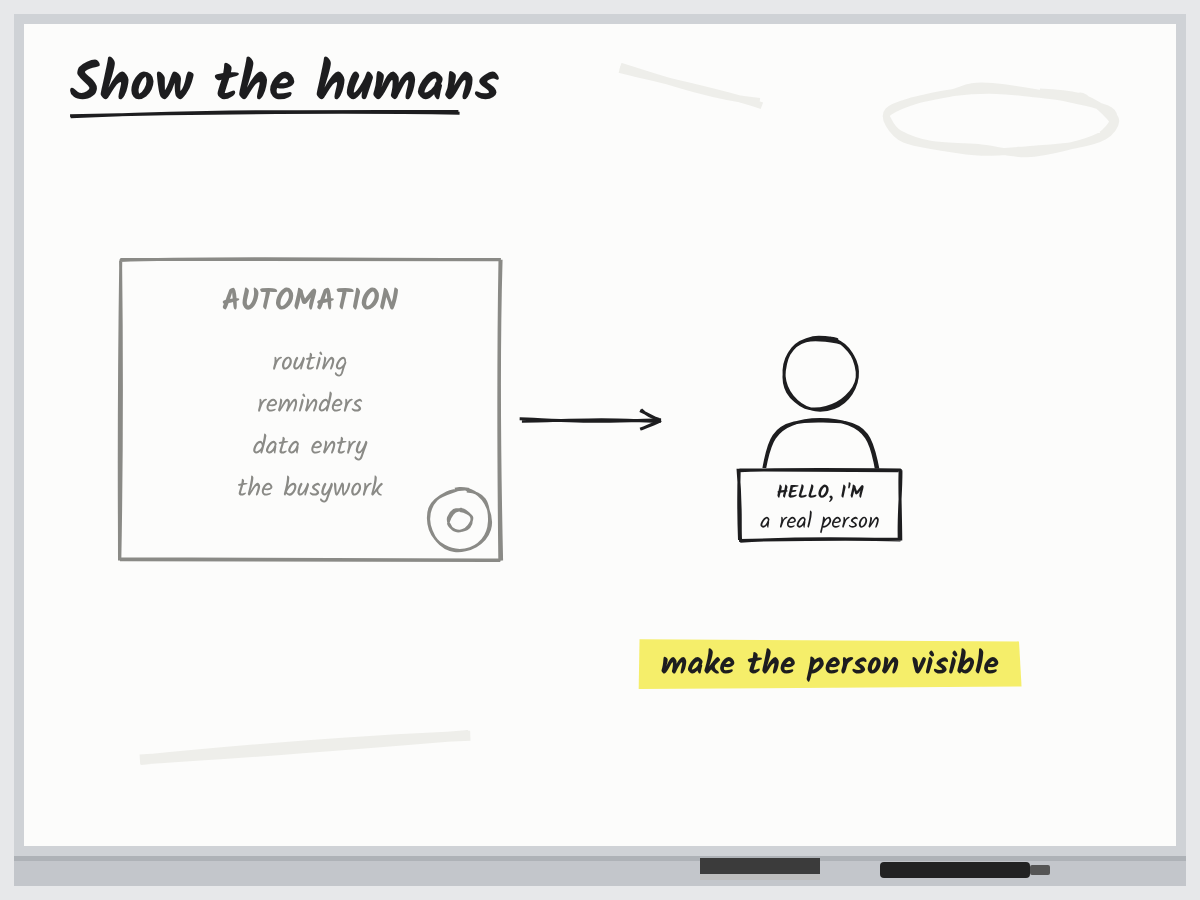
I don’t think the answer is to stop automating. Plenty of work should be done by software, and buyers are happy when it is. The point is to be clear about which parts of your GTM are worth a person, and then make that person visible. Put names and faces where people expect a bot, let your team sound like themselves, and do a few things that don’t scale. If your competitors are automating everything, the human parts of your company are easier to notice than they have been in years. How long that lasts is a fair question, and one worth coming back to once it starts to fade.